

Published by El Observador, Costa Rica
Pacific Color 2025: Work on the ocean is just beginning
We biologists are used to working in the field and in the laboratory, but there’s one thing we’re not so good at: communicating our work.
Damian Martinez of the Costa Rican Fishing Federation
Since I was little, I always knew I wanted to be a marine biologist. I imagined myself exploring the ocean, discovering incredible creatures, and understanding the secrets of the sea. But every time I said it out loud, someone would reply, “That’s hopeless. You’ll never find a job.”
The reality, however, is very different. Not only is there work to be done, there’s a lot to be done. The ocean needs us more than ever, and science still has many unanswered questions.
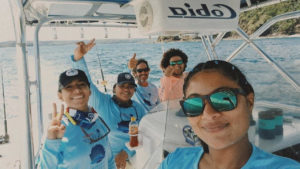
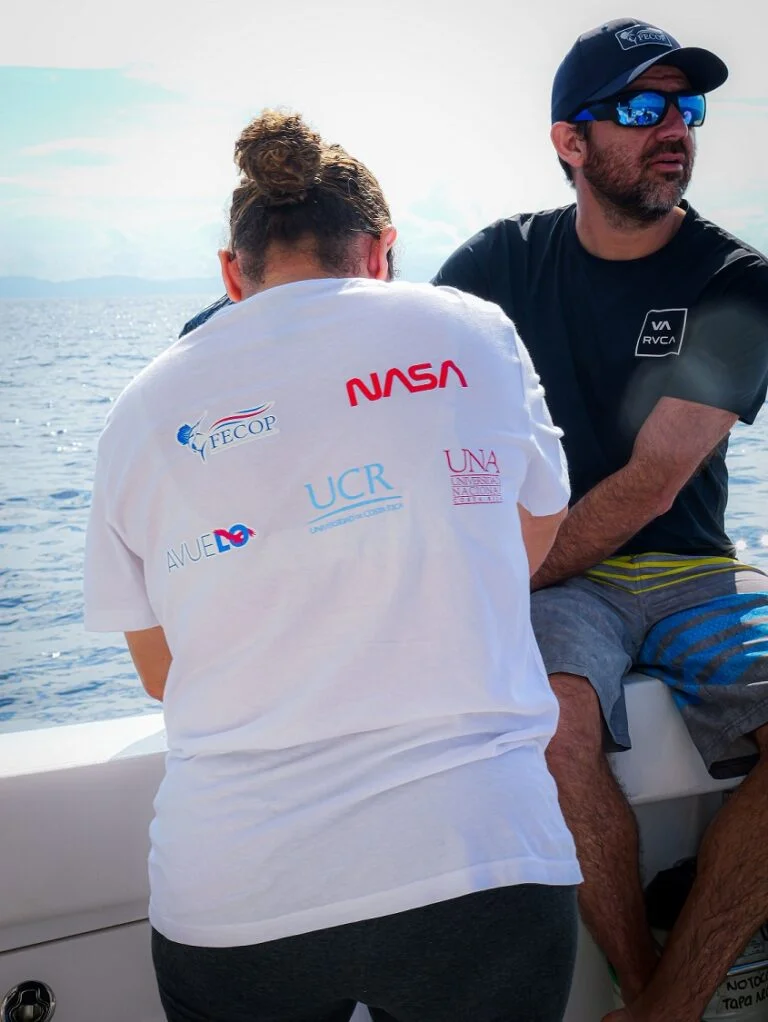
This year, I was part of Pacific Color 2025, an unprecedented expedition in Costa Rica. There, researchers from Fecop, NASA, Avuelo, UCR, and UNA joined forces to study ocean color and what it reveals about our health.

When the ocean changes color, it speaks to us
The color of the sea is not just a matter of aesthetics; it is a window into the processes occurring beneath the surface.
Phytoplankton, microscopic organisms that float with the currents, are primarily responsible for the water’s color. When they are scarce, the sea is blue; when they are abundant, it turns green.
And in some cases, they can grow uncontrollably and turn the ocean red, causing the dreaded red tides, which affect marine life, fisheries, and even human health.
But phytoplankton isn’t just an indicator: it’s the foundation of life in the ocean and produces half of the oxygen we breathe. Without it, the marine food chain would collapse, and life on Earth would change dramatically.
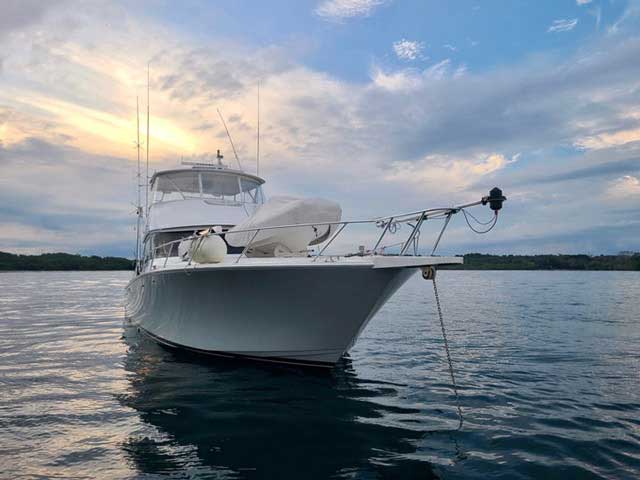
Returning to Port: The Work No One Sees
After five intense days at sea, the expedition didn’t end when they reached land. Quite the contrary: the work was just beginning.
The return to port marked the beginning of another crucial stage. First, all the equipment had to be unloaded: optical measuring instruments, sample bottles, filters with biological material, and computers filled with data. Each piece had to be inspected, cleaned, and properly stored for future expeditions.
Then came the handling of the samples, a meticulous process that required hours and hours in the laboratory. Some had to be filtered and frozen immediately, while others were processed for pigment and water chemistry analysis.
Laboratory work is exhausting and meticulous. Strict protocols must be followed, delicate reagents must be used, and analyses must be performed that require absolute concentration. For weeks—and in some cases, months—scientists and students spend long hours processing, classifying, and validating data collected at sea.
An unexpected challenge: communicating science
We biologists are used to working in the field and in the laboratory, but there’s one thing we’re not so good at: communicating our work.
Doing science isn’t enough; we have to tell the story. What’s the point of discovering patterns in phytoplankton or improving satellite monitoring if we can’t get society to understand why it’s important?
That’s why Pacific Color 2025 isn’t just about collecting and analyzing data. It’s also an effort to bring this knowledge to the public. We want more people to understand what’s happening in the ocean, how it affects us, and what we can do to protect it. That’s what we envision with the development of the PezCa app—information at everyone’s fingertips.
This blog series is part of that effort. But there’s still more work to be done: publishing results in scientific journals and preparing accessible reports for decision-makers.
As well as creating audiovisual materials for social media and the media, and giving talks and workshops so the community can embrace the knowledge generated.

The long road ahead
It’s been more than 30 days since we completed the fieldwork, but there are still many months to go before this initiative is consolidated.
Processing data from an expedition like this isn’t something that can be done in days or weeks. Every result must be validated, every sample must be accurately analyzed, and every conclusion must be supported by solid evidence.
Pacific Color is not just an expedition. It’s the beginning of a new way of studying and understanding our ocean. It’s an initiative that seeks to establish capacity in the country, so that in the future we won’t depend exclusively on external collaborations to monitor our seas.
The ocean gives us so much, but our actions on land—the plastic we throw away, the chemicals we use, the way we consume marine resources—can upset its balance.
Today, more than ever, we must view the sea with respect and commitment. Because protecting it is not just a task for scientists; it’s everyone’s responsibility.