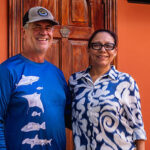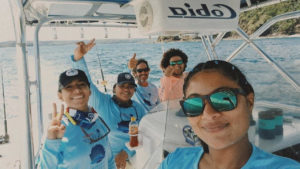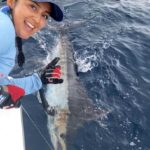

In the context of the electoral process that will culminate with the national elections in February 2026, Costa Rica’s sport fishing tourism sector launched the campaign “Yes, We Do Have a Stake in This” (“Sí tenemos Vela en este entierro”).
This initiative seeks to follow up on the sector-wide manifesto presented at the end of 2025 and to take its main demands directly to political parties and presidential candidates.
The campaign will run throughout the month of January via social media and is part of a broader process of participation and dialogue that has involved coastal communities, tourism operators, captains, guides, small local businesses, and organizations linked to sport and recreational fishing.
That process made it possible to identify the issues the sector considers priorities for the next government—issues that still lack clear responses in the current electoral debate.
Marina Marrari, Executive Director of the Costa Rican Federation of Fishing (FECOP), emphasized:
“Sport and recreational fishing is an activity that generates direct and indirect employment in coastal areas, drives high–value-added tourism, and sustains local economic linkages such as lodging, transportation, food services, vessel maintenance, and complementary services.”
For many communities outside the Central Valley, this activity represents a stable source of income tied directly to the conservation of marine resources, FECOP added. They also explained that Sí tenemos Vela en este entierro” or in English “Yes, We Do Have a Stake in This” does not introduce new demands, but rather highlights and reinforces proposals already on the table:
-
The need for stronger governance of marine resources through representation of the sport fishing tourism subsector on the Board of Directors of INCOPESCA, and the creation of a Special Sport Fishing Tourism Commission within the Costa Rican Tourism Institute (ICT).
-
Clear rules for the conservation of species of touristic interest such as tarpon, roosterfish, sailfish, and marlin.
-
Training and re-skilling programs led by the National Training Institute (INA).
-
The design of specific infrastructure, such as docks and piers tailored to the real needs of sport fishing tourism.

The campaign’s message is that the future of sport and recreational fishing—and of the thousands of families who depend on it—is closely tied to the political decisions that will be made during the next government term.
The sector is making a public call to political parties and presidential candidates to incorporate these issues into their platforms and to clearly explain their positions regarding the responsible management of marine resources.
Delfino CR
By Alonso Martínez
Journalist. Email: alonso[at]delfino.cr