By Aurora Camacho Navarro
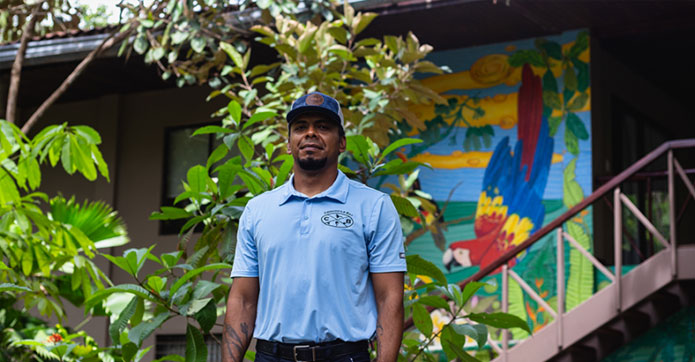
Diego Camacho, director of fishing and fleet at Crocodile Bay, promotes processes related to tourist and sport fishing, training of new generations and local opportunities in Puerto Jiménez, Costa Rica’s South Pacific.
Credit: Allan Barboza-Leitón
Puerto Jiménez has been one of the areas where sport fishing has undergone a significant transformation in recent decades. What years ago was an activity carried out by a few operators with limited opportunities for the local population, is now part of a broader network that links tourism, employment, technical training, marine conservation, and territorial development in the South Pacific region of Costa Rica.
In this context, Crocodile Bay —now linked with Botánika Osa Peninsula Resort— has established itself as one of the leading players in the area, integrating sport fishing, hospitality and ecotourism in close relation to the Osa Peninsula and the Golfo Dulce.
From this experience, Diego Camacho, director of fishing and fleet, describes an activity that has evolved significantly in recent decades, moving from practices focused solely on capture towards approaches oriented towards sustainability, responsible management of species and the training of new generations linked to the sea.
Diego’s career path also reflects part of the recent evolution of the sector. Although born in Costa Rica, he grew up in the United States, where from a very young age he became involved with fishing in rivers and lakes, later becoming involved in marine sport fishing alongside relatives who worked as captains in Florida.
After years of training and practice on private vessels, he arrived in Costa Rica in 2015 to initially work during fishing seasons in Puerto Jiménez, until later assuming the management of fishing and fleet at Crocodile Bay.
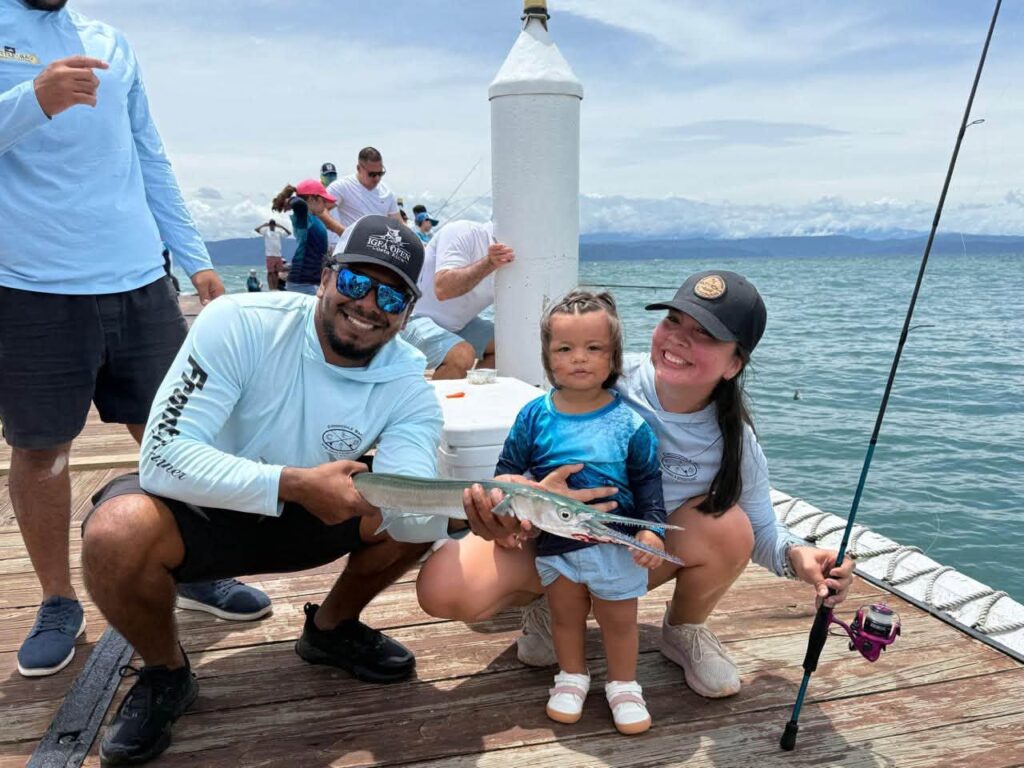
Puerto Jiménez possesses unique characteristics that distinguish sport fishing in the South Pacific. The combination of open ocean, shore fishing, and proximity to ecosystems of high biological value makes the Osa Peninsula a strategic territory for species such as roosterfish, sailfish, marlin, jacks, snappers, and pompano, among other emblematic species of Costa Rican sport fishing.
According to Diego, much of the technical talent that works today in marinas and sport fishing operations in the Central and North Pacific was initially trained in this region of the country, historically linked to the development of the activity.
Local training for new opportunities
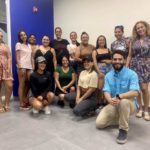
The Crocodile Sport Fishing Academy has trained more than one hundred people from the region.
Beyond tourism, one of the central elements promoted by Crocodile Bay has been the strengthening of local capacities.
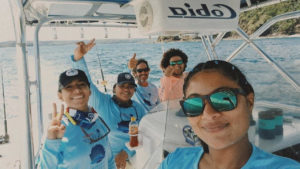
Based on the identification of access barriers for young people in the territory interested in joining the sector, the organization created the Crocodile Sport Fishing Academy, a training program aimed at training local people in principles of responsible fishing, proper handling of species, release techniques, safety, conservation and work on sport fishing boats.
Based on the experience of Diego Camacho (Crocodile Bay), this video addresses sport fishing tourism as an activity linked to specialized tourism, marine conservation, and Costa Rica’s international positioning as a responsible fishing destination. It highlights catch-and-release practices, operating standards, and the relationship between sustainability and the tourist experience.
Currently, the program has graduated more than one hundred people and has allowed numerous participants to integrate into the workforce in the sector, including sailors, guides and captains who now work both in Crocodile Bay and in other sport fishing operations within and outside the region.
Sport fishing is a tourist activity and, at the same time, an opportunity for specialized employment, social mobility and strengthening of local economies.
Conservation as a fundamental principle
Sustainability is another central focus of the proposal promoted by Diego and his team.
Through personal learning processes and collaboration with conservation initiatives, Crocodile Bay has promoted practices focused on the well-being of species and the responsible use of marine resources.
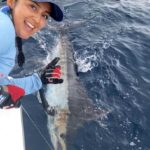
These include the implementation of circular hooks to reduce damage to species, responsible catch and release protocols, strict restrictions on fishing in protected areas, and ongoing awareness processes aimed at captains, sailors, and visitors.
From this perspective, species such as the sailfish, marlin, or roosterfish cease to be understood solely as fishing resources and also become part of the natural and economic heritage that sustains local tourism.
The continued existence of these species over time is recognized as a fundamental condition for the future of sport fishing, job opportunities, and the economic well-being of the region.
A coordinated effort with the territory
The Crocodile Bay experience also reflects territorial articulation processes with local actors, sport fishing operators and organizations in the southern zone.
Although challenges related to regulation, oversight, and tensions surrounding the use of marine resources persist, Diego acknowledges significant progress in building coordination spaces aimed at strengthening responsible practices and consolidating sport fishing as a sustainable activity for the territory.
Alongside fishing, the connection with Corcovado National Park and ecotourism geared towards families and people interested in tranquility, nature and closeness to the environment are part of the added value of Puerto Jiménez as a tourist destination.
According to Diego, many visitors return not only for the fishing, but also for the hospitality, the sense of community, and the connection with one of the most biodiverse territories in the country.
More than just sport fishing
Crocodile Bay demonstrates how sport fishing can transcend tourism to also become a means of training, specialized employment and community strengthening.
In Puerto Jiménez, the relationship with fishing, aquatic ecosystems and the territory has opened new opportunities for the local population, consolidating learning and professionalization processes aimed at the responsible care of the species and environments that make the activity possible.
About this project
This blog is part of a consultancy process on the sectoral identity of tourist and sport fishing, led by Aurora Camacho Navarro, consultant for the “Participatory Tourist Fishing” project developed by the Costa Rican Fishing Federation (FECOP), with the support of the Embassy of the United States of America in Costa Rica.
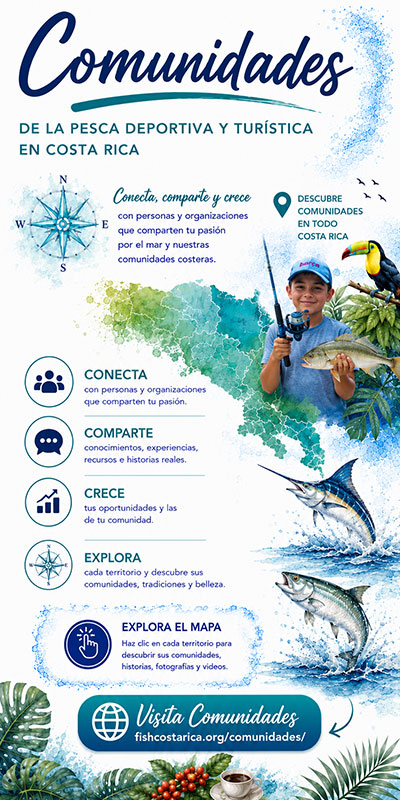
To learn more about the communities that live and practice sport and tourism fishing in our country, visit:
Fish Costa Rica – Communities
https://es.fishcostarica.org/comunidades