CCMAR Santa Elena and Casa del Viento
Citizen science, marine conservation and tourism fishing in the North Pacific of Costa Rica
Author: Aurora Camacho Navarro
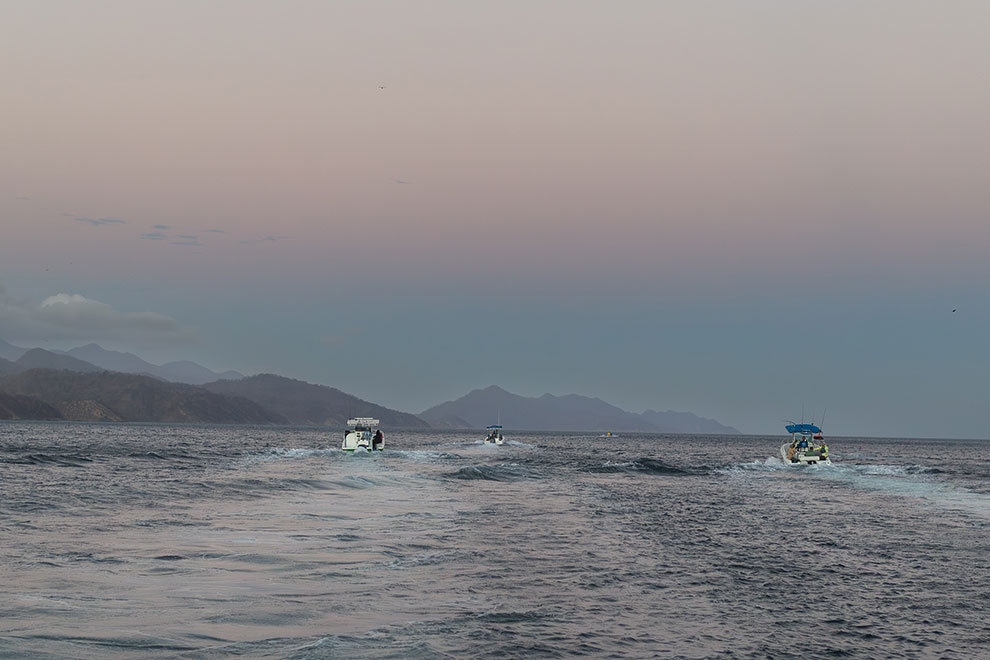
In Cuajiniquil, Guanacaste, the relationship between tourism fishing, conservation, and territorial development has begun to transform through collaborative processes involving the community, science, and local stakeholders. The experience developed between CC-MAR Santa Elena — Marine Citizen Science — and Casa del Viento demonstrates how the exchange between scientific and local knowledge can strengthen marine conservation, participatory monitoring, and responsible tourism fishing in the North Pacific region of Costa Rica.
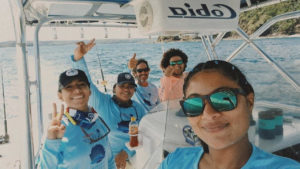
CC-MAR Santa Elena is a marine citizen science initiative aimed at strengthening the connection between communities and science to investigate, protect, and educate about the region’s marine ecosystems. Through participatory monitoring, species tagging, sighting reports, environmental education, and knowledge sharing between scientists and coastal communities, the program has fostered new forms of community participation linked to marine conservation and the sustainable use of marine resources.
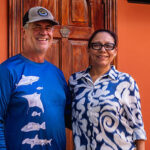
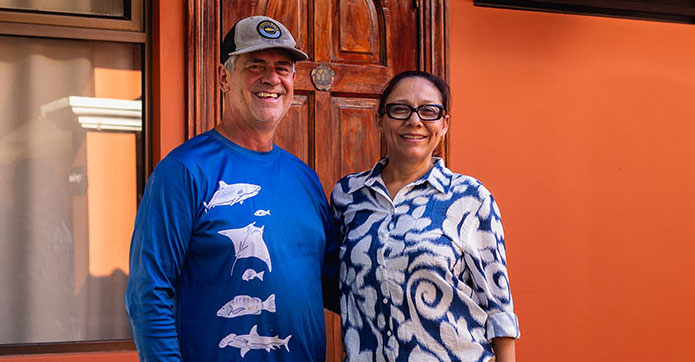
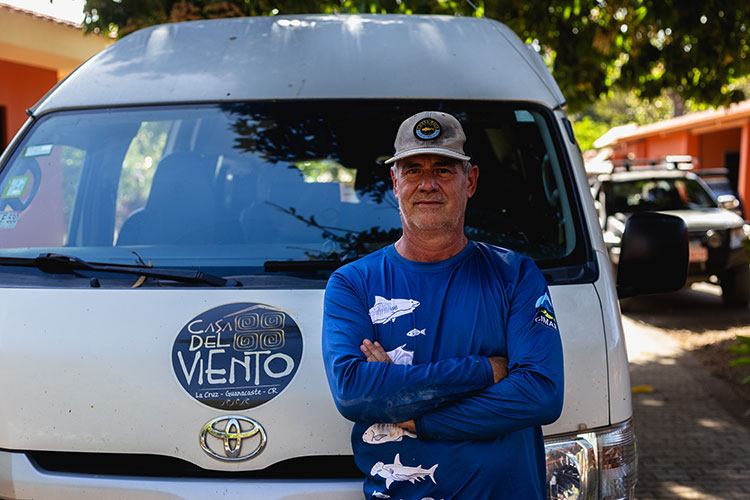
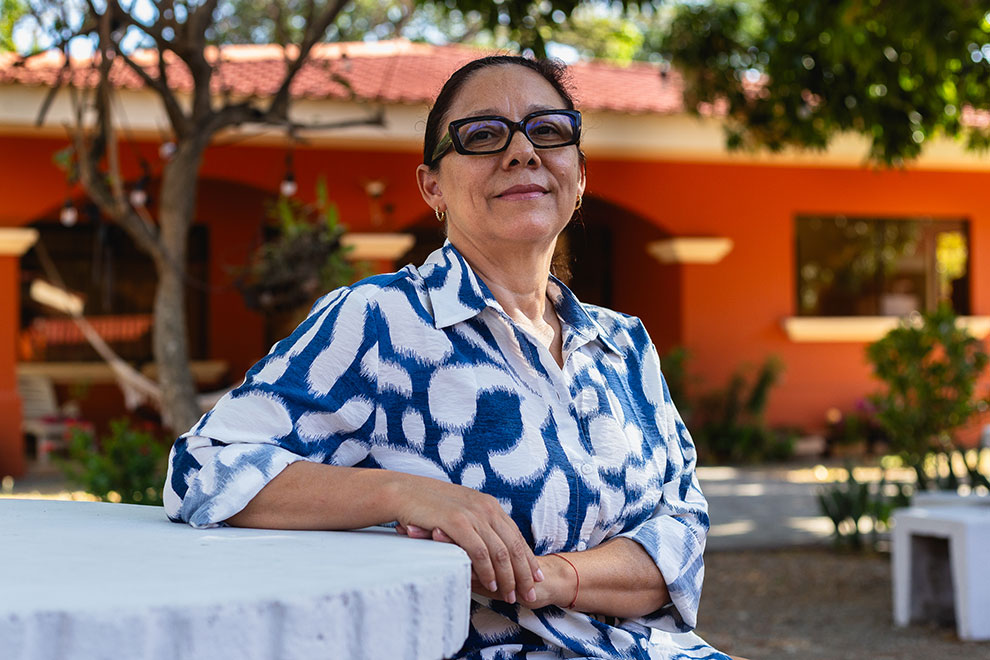
For Leticia Salas and Otto Rojas, owners of Casa del Viento and territorial partners of CC-MAR Santa Elena, the arrival of this citizen science process marked a turning point in Cuajiniquil. “It’s like the heart that unites the community with science,” explains Leticia, referring to the work promoted by the program, highlighting how it has brought scientific knowledge closer to fishermen, tour operators, and community members.
One of CC-MAR’s most significant contributions has been its involvement of the community in knowledge generation. Fishermen, guides, tour operators, students, and local residents actively participate in sample collection, species monitoring, marine wildlife sightings, tracking ecosystem changes, and community reporting on situations affecting the marine environment.
As Otto explains, this process has allowed many people to feel part of marine research and conservation, becoming a kind of “amateur scientists” committed to caring for the sea and its species.
The Casa del Viento experience also reflects a form of tourism linked to the land and environmental sustainability. Through lodging, food, and tour operation, Leticia and Otto have built a business focused on connecting visitors with the natural wealth of Cuajiniquil, integrating tours of marine ecosystems, experiences in tropical dry forest, wildlife observation, and activities related to responsible fishing tourism.
From their experience, much of the motivation to get involved in conservation processes stems precisely from recognizing that the well-being of the company and the community depends directly on the health of the ecosystems that support tourism activity.
In this context, tourist and sport fishing appears as an important opportunity to diversify local economies, strengthen activities linked to coastal tourism and promote more sustainable ways of using marine resources.
Otto and Leticia believe that areas like Cuajiniquil possess significant strengths for the development of this activity: an abundance of species, the accumulated knowledge of local fishers, beautiful landscapes, and a unique combination of sea, tropical dry forest, and geological heritage. From their perspective, the area has exceptional conditions to position itself as a destination for responsible sport fishing and specialized coastal tourism.
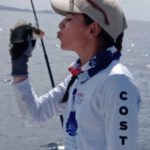
Video description: This video explores the relationship between sport fishing, monitoring, and conservation of marine species in the North Pacific of Costa Rica. Drawing on citizen science experiences and fieldwork, it highlights the value of combining local knowledge, scientific knowledge, and marine conservation. Participants include Leticia Salas from Casa del Viento and Lucía Vargas from CCMAR.
For both, the strengthening of initiatives linked to tourist and sport fishing and coastal tourism has involved learning and transformation processes within the community, particularly around the responsible management of species, respect for closed seasons and the conservation of marine ecosystems.
While acknowledging the coexistence of different fishing models—including commercial, artisanal, and recreational fishing—they point out that challenges related to regulation, sustainability, and coexistence among the various uses of marine resources persist. In this context, they believe that positive changes are gradually beginning to emerge, related to improved practices, waste management, and greater awareness of the importance of protecting aquatic ecosystems.
Otto points out that one of the most important lessons has been understanding that “there is no development without protection and no conservation without development,” emphasizing that both processes must move forward in an articulated manner.
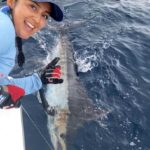
Among the opportunities identified to strengthen the sector, Leticia also emphasizes the importance of expanding the participation of women in fishing tourism and related marine services.
From her experience, she believes that opening training and employment opportunities for women —as is happening in initiatives promoted in other coastal territories— could significantly strengthen the tourism and economic development of communities like Cuajiniquil.
Beyond the economic dimension, Otto describes fishing as an experience deeply linked to well-being. “Fishing is like therapy,” he says, explaining how time spent at sea, the tranquility, the thrill of the catch, and the connection with the environment generate a sense of enjoyment and disconnection from the daily grind. In this sense, sport fishing also emerges as a practice associated with well-being and more respectful ways of relating to marine ecosystems.
The experience of CC-MAR Santa Elena and Casa del Viento demonstrates how marine conservation, citizen science, coastal tourism, and sport fishing can coexist within territorial processes geared toward sustainable development. In a region marked by its ecological and marine richness, the collaboration between the community, scientific knowledge, and local stakeholders emerges as a key element for envisioning more sustainable futures for tourism and sport fishing in the North Pacific of Costa Rica.
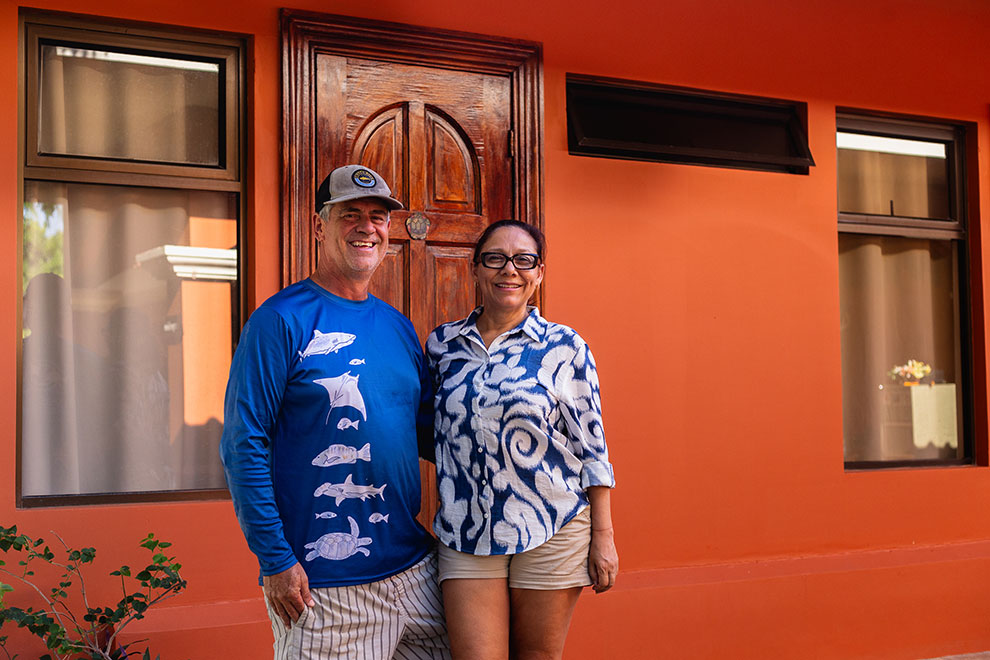
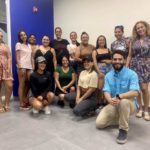
Leticia Salas and Otto Rojas, from Casa del Viento, are strengthening the integration of coastal tourism, marine conservation, and recreational and sport fishing in Cuajiniquil, Guanacaste. Photo: Allan Barboza-Leitón.
This blog is part of a consultancy process on the sectoral identity of tourist and sport fishing, led by Aurora Camacho Navarro, consultant for the “Participatory Tourist Fishing” project developed by the Costa Rican Fishing Federation —FECOP—, with the support of the Embassy of the United States of America in Costa Rica.
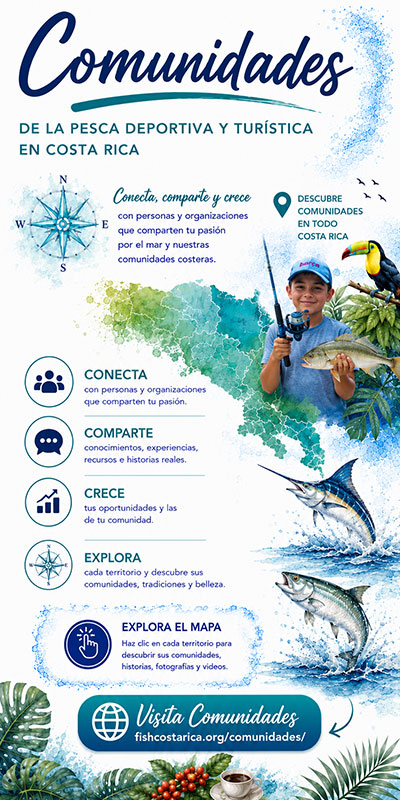
To learn more about the communities that live and practice sport and tourism fishing in our country, visit: https://fishcostarica.org/comunidades