Author: Aurora Camacho Navarro
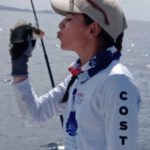
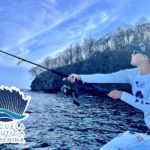
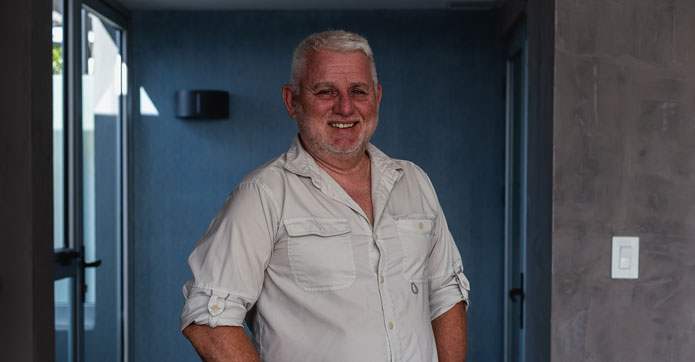
Franco Alvarenga, from the Amateur Fishing Club, shares his experience with recreational and sport fishing, best practices, and strengthening the sector in Costa Rica. Photo: Allan Barboza-Leitón.
With eight decades of history, the Amateur Fishing Club is one of the pioneering sport fishing organizations in Costa Rica. Founded on June 11, 1946, the club arose from the initiative of a group of fishing enthusiasts interested in organizing themselves around a shared practice, establishing rules for competitive fishing, and promoting opportunities for anglers to meet. Currently, it has around seventy members and remains one of the oldest sport fishing organizations in Costa Rica.
Since its inception, the club has primarily focused on organizing sport fishing tournaments, including national and international competitions for species such as tarpon and sailfish . Throughout the year, they hold various specialized tournaments, social gatherings, and activities designed to strengthen the sport, foster interaction among anglers , and promote collective learning about responsible fishing practices.
The term “amateur” is part of the club’s historical identity and reflects a particular logic: practicing fishing as a sport and hobby, without it being a primary source of income. As its members explain, this distinction also defines a specific way of relating to the activity, where fishing is understood not only as catching fish, but also as a sporting experience, a time for camaraderie, and a connection with the aquatic environment.
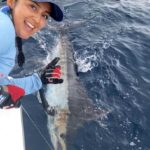
One of the most significant changes in the history of the Amateur Fishing Club has been its evolution towards increasingly responsible practices regarding species and ecosystems. While during the first decades it was common for captured fish to be killed, the club progressively promoted a transformation towards catch and release , encouraging the use of circle hooks, inline hooks , improved handling techniques, and protocols aimed at reducing species mortality.

According to Franco Alvarenga and Fanny Carpio, this transition occurred relatively naturally as it became evident that protecting the species was beneficial both for the ecosystem and for the sustainability of the sporting activity.
Currently, best practices are central to the club’s identity. Protecting species, respecting minimum sizes, minimizing harm during catch and release, and promoting national and international sport fishing regulations are key elements of its work. In this regard, the Amateur Fishing Club has also played an educational role, promoting awareness and learning processes aimed at both experienced anglers and new generations interested in the sport.
For its members, sport fishing also implies a particular ethic of relationship with the natural environment. The activity is understood through respect for the species, the sea, the rivers, the weather conditions, the coastal communities, and the regulations associated with the activity. “If we don’t protect the resource, we’ll lose our sport,” says Fanny Carpio, explaining how environmental sustainability is an essential condition for the future of sport fishing in Costa Rica.
Beyond its sporting aspect, the club also recognizes fishing’s contribution to personal and social well-being. Its members describe fishing as an activity associated with mental health, recreation, camaraderie, and community building. Shared experiences in tournaments, trips, and fishing excursions strengthen social bonds and create spaces for intergenerational exchange among people united by a common interest.
Desde una mirada más amplia, Franco y Fanny destacan además el papel de la pesca deportiva como motor de dinamización económica en comunidades costeras. Marinas, hoteles, restaurantes, comercios, mantenimiento de embarcaciones, tiendas especializadas y servicios turísticos forman parte de un ecosistema económico vinculado al crecimiento del sector. En este contexto, la pesca deportiva aparece como una actividad con capacidad de generar empleo directo e indirecto, fortalecer economías locales y promover oportunidades asociadas al turismo especializado.
Entre los principales desafíos del sector, el Club Amateur de Pesca identifica la necesidad de fortalecer procesos de educación en buenas prácticas, promover mayor sensibilización sobre sostenibilidad y consolidar procesos de formación orientados a nuevas generaciones.
Video:
Descripción: A partir de las experiencias del Club Nacional de Pesca y el Club Amateur de Pesca, este video aborda la pesca deportiva como un espacio de organización, aprendizaje y construcción de comunidad. Se destacan procesos de acompañamiento entre personas con experiencia y nuevas generaciones de pescadores, así como dinámicas de transmisión de conocimiento, participación de nuevos perfiles y transición hacia prácticas de pesca responsable dentro del sector. Participan Johel Chaves y Fanny Carpio.
Asimismo, Franco Alvarenga y Fanny Carpio señalan retos vinculados al fortalecimiento de la regulación y gobernanza del sector, el cumplimiento de normativas orientadas a la protección de especies y la pesca ilegal en algunas zonas costeras y la necesidad de mayor reconocimiento institucional de la pesca deportiva como una práctica con valor económico, recreativo y ambiental. En este contexto, reconocen además el valor del intercambio de conocimientos entre pesca deportiva y conocimientos locales de comunidades costeras, entendiendo que la sostenibilidad de la actividad depende también del diálogo entre distintas formas de conocimiento vinculadas al mar, los ríos y al comportamiento de especies emblemáticas para la pesca deportiva —como el sábalo real (tarpon), el pez vela (sailfish), el dorado y otras especies pelágicas y costeras— cuyo conocimiento resulta central para el desarrollo responsable de la actividad.
La experiencia del Club Amateur de Pesca evidencia cómo la organización colectiva, la evolución de prácticas responsables y el fortalecimiento de comunidades de aprendizaje han contribuido al posicionamiento de la pesca deportiva en Costa Rica. Ocho décadas después de su fundación, el club continúa representando un espacio donde deporte, conservación, convivencia y transmisión de conocimiento se articulan como parte de una misma tradición vinculada al agua y a la pesca responsable.
______________
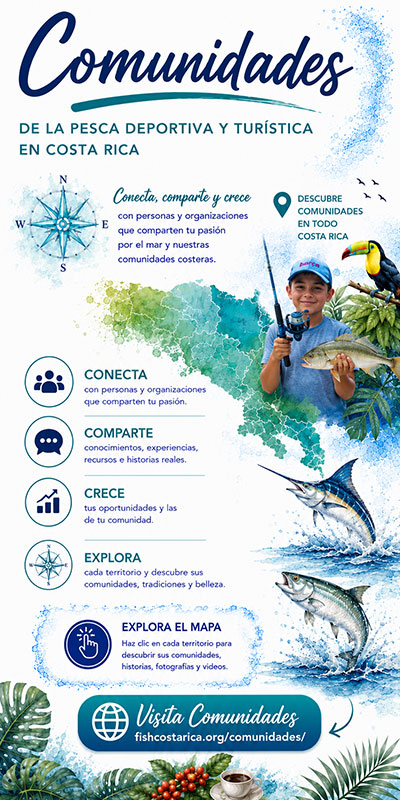
This blog is part of a consultancy process on the sectoral identity of recreational and sport fishing, led by Aurora Camacho Navarro, consultant for the “Participatory Recreational Fishing” project developed by the Costa Rican Fishing Federation (FECOP), with support from the Embassy of the United States of America in Costa Rica. To learn more about the communities that live and practice recreational and sport fishing in our country, visit: https://fishcostarica.org/comunidades